What if the next winter storm wasn’t a source of anxiety, but simply a quiet backdrop to the view from your window? For many homeowners in Buckinghamshire, the sound of high winds often brings the familiar worry of leaning panels or snapped timber posts. You likely view your garden as a private sanctuary, yet maintaining that boundary can feel like a recurring battle against the elements and natural decay. Investing in premium chesham fencing is about more than just marking a line on a map; it’s about creating a durable frame for your home that stands firm for decades.
We understand that navigating boundary rules and selecting materials that balance aesthetic harmony with structural integrity is a significant undertaking. This guide provides the clarity you need to choose and install a boundary that offers total peace of mind. We’ll examine the specific planning requirements for the Chilterns Area of Outstanding Natural Beauty, the latest low-maintenance material trends for 2026, and how our methodical management process removes the logistical burden from your shoulders. By focusing on precision and high-quality execution, you can transform your property’s perimeter into a lasting asset.
Key Takeaways
- Learn how Chesham’s unique topography and wind loads in the Chiltern Hills necessitate specific structural considerations for your garden boundary.
- Discover the aesthetic and functional differences between robust closeboard panels and bespoke decorative trellis designs to find your property’s ideal match.
- Identify the technical specifications, such as post depth and the use of gravel boards, that ensure your chesham fencing remains stable and rot-resistant for years.
- Navigate complex local planning regulations, including height restrictions and specific constraints for properties within the Chilterns Area of Outstanding Natural Beauty.
- Understand the benefits of a managed installation process that covers everything from the initial site survey to the final delivery of a secure, private boundary.
Understanding Fencing Requirements in the Chesham Landscape
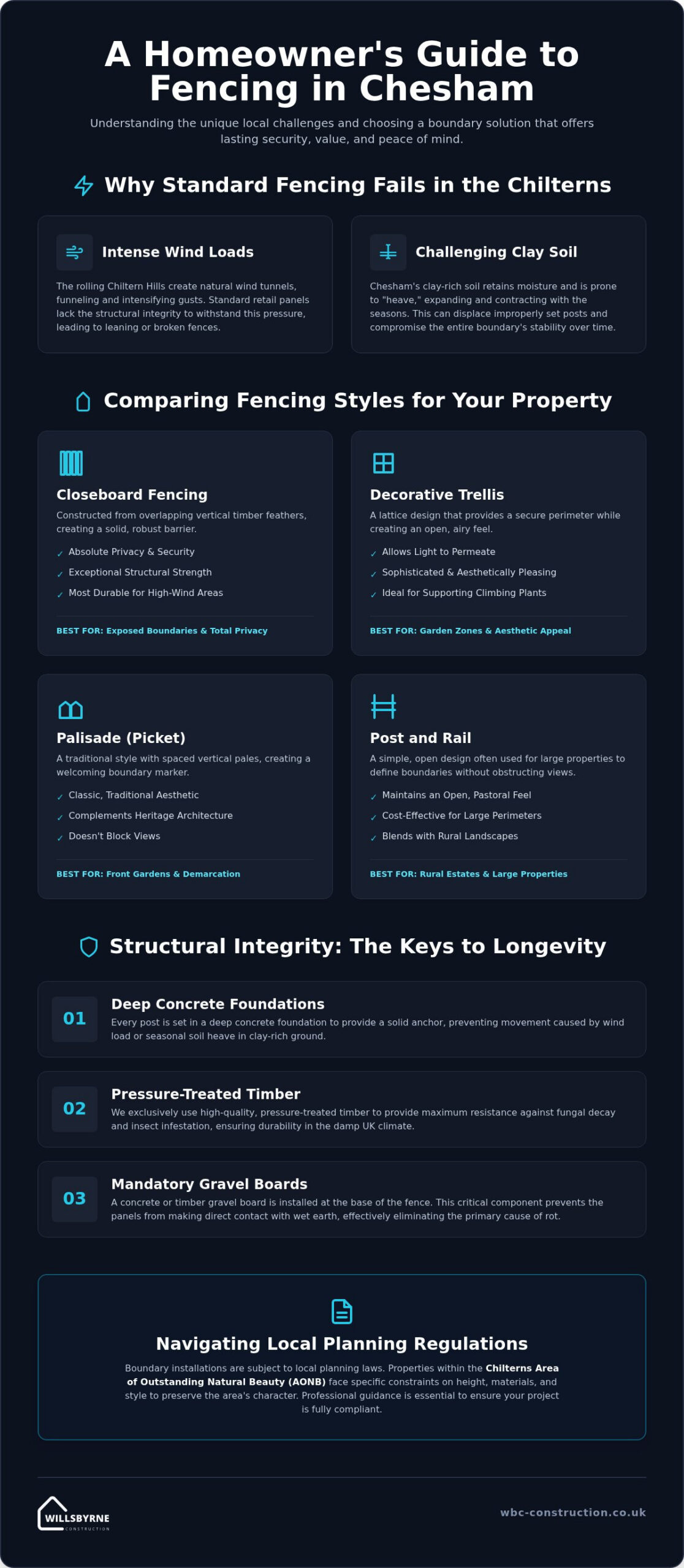
Chesham’s topography is defined by the rolling Chiltern Hills, a landscape that offers stunning views but presents unique challenges for property boundaries. The town’s position within these valleys creates natural wind tunnels, where gusts are funneled and intensified. This means that chesham fencing must be engineered to withstand significant wind load. Standard retail panels often fail under this pressure because they lack the structural depth and secure fixings required for exposed elevations. We prioritize a methodical design process that accounts for these local environmental factors, ensuring your boundary remains upright and secure during the harshest Buckinghamshire winters.
A well-executed boundary does more than just provide security; it significantly enhances property value across Chesham and the wider county. In high-end residential areas, the perimeter is the first indicator of a property’s condition. We believe a fence should be viewed as a permanent structural asset rather than a temporary fix. Understanding Fencing Requirements involves recognizing that a boundary is a legal marker that requires precision in both placement and construction. By choosing bespoke solutions over generic retail kits, you ensure a seamless fit that follows the specific contours of your land without awkward gaps or stepped levels.
Our approach integrates fencing as the essential “frame” for your outdoor space. It’s a critical component of our wider service as landscaping contractors. Whether we’re installing a new patio or a bespoke garden room, the boundary provides the necessary privacy and aesthetic backdrop to make those features stand out. This comprehensive oversight ensures that every element of your garden works in harmony, delivered through a single point of contact for total convenience.
Local Climate and Soil Considerations
Chesham’s soil often features high clay content, which poses a risk to traditional timber installations. Clay retains moisture for long periods and is prone to “heave” as it expands and contracts with the seasons. We address this by using deep, concrete-set foundations for every post. To combat the damp UK climate, we utilize pressure-treated timber and non-negotiable gravel boards. These components prevent the base of the fence from making direct contact with the wet earth, effectively stopping fungal decay and rot before they can take hold.
Aesthetic Harmony with Chesham Architecture
Matching a boundary to Chesham’s diverse architecture requires a keen eye for detail. Traditional flint cottages and brick-and-timber homes demand classic styles like vertical closeboard or picket fencing that respect the town’s heritage. For more contemporary developments, we often recommend horizontal slatted panels that provide a sleek, modern finish. We ensure the materials and colors selected complement your home’s existing character, creating a cohesive look that blends structural perfection with visual appeal.
Comparing Fencing Styles: From Closeboard to Bespoke Trellis
Selecting the ideal style for your property requires a careful balance between functional requirements and your aesthetic vision. In the diverse residential areas of Buckinghamshire, the choice of chesham fencing often begins with Closeboard. This style is constructed from overlapping vertical timber feathers, creating a solid, overlapping barrier that offers absolute privacy and exceptional structural strength. Closeboard fencing is the most durable option for high-wind areas in 2026. Its robust design makes it the preferred choice for boundary security in exposed locations.
We provide a variety of other specialized styles to suit different areas of your estate:
- Decorative Trellis: This offers a sophisticated boundary that secures the perimeter while allowing light to permeate the garden.
- Palisade (Picket): Ideal for front gardens, this style creates a welcoming, traditional aesthetic that complements heritage brickwork.
- Post and Rail: A classic choice for larger rural estates, defining boundaries while maintaining an open, pastoral feel.
Privacy vs. Light: Finding the Balance
Modern garden design frequently utilizes slatted panels to create an airy, contemporary atmosphere. These panels allow light to filter through while maintaining a clear sense of separation from neighbors. Integrating trellis toppers is another effective method for adding height and security without making a space feel enclosed. Beyond visual appeal, denser fencing styles provide significant acoustic insulation, acting as a buffer against local road noise. Before finalizing your design, it is prudent to consult the official guidance on Planning Permission and Boundary Laws in Chesham to ensure your project meets all height regulations.
Material Choices: Timber, Concrete, and Metal
The longevity of your boundary depends heavily on the grade of components selected during the planning phase. We prioritize pressure-treated redwood over lower-grade alternatives, as its natural density offers superior resistance to fungal decay. In areas with damp soil, concrete gravel boards are essential for protecting the base of timber panels from moisture. For clients seeking a contemporary, maintenance-free solution, we recommend DuraPost systems. These galvanized steel posts provide a sleek look that won’t warp or crack over time. If you’re ready to refine your garden’s perimeter, our team can help you design a bespoke fencing solution tailored to your property’s specific needs.
Structural Integrity: The Anatomy of a Long-Lasting Fence
The longevity of any boundary depends entirely on what lies beneath the surface. While the panels provide the visual appeal, the posts and foundations do the heavy lifting, especially in the exposed elevations of the Chilterns. We’ve seen countless examples where chesham fencing has failed prematurely because the posts weren’t set to a sufficient depth. For a standard six-foot fence, we ensure posts are anchored at least two feet into the ground. This depth provides the necessary leverage to resist the “sail effect” caused by high winds, preventing the leaning and wobbling that often plagues DIY installations.
Protecting the timber from ground-level moisture is equally critical for structural health. We consider gravel boards to be a non-negotiable component of a premium installation. By creating a physical barrier between the soil and the bottom of your fence panels, gravel boards prevent the “wicking” effect where moisture travels up the grain and causes rot. Before starting any construction, it’s vital to consult the UK government guidance on fencing to ensure your structural plans align with height restrictions. Our methodical approach also includes managing drainage around the base of each post. We dome the concrete foundation at the top to ensure water sheds away from the timber rather than pooling against it.
Post Selection: Timber vs. Concrete
Choosing the right post material is a decision that balances aesthetics with long-term maintenance. Timber posts offer a seamless, natural look that many homeowners prefer for traditional garden designs. However, concrete posts remain the gold standard for pure longevity as they’re entirely impervious to rot and wood-boring insects. For clients who want the strength of a structural system with a more contemporary finish, we often recommend hybrid metal solutions. These provide a sleek, slimline profile that won’t warp or crack, offering a maintenance-free alternative to traditional materials.
Bespoke Joinery and Construction
The difference between a standard fence and a high-end boundary lies in the construction method. While many providers rely on pre-made panels, we specialize in “on-site” closeboard construction. This involve building the fence piece-by-piece directly onto the structural rails. This method allows for a much tighter fit and eliminates the rattling and movement common in off-the-shelf products. We also extend this precision to our custom gates and entrance solutions. By using matched joinery techniques, we create a unified look that ensures your garden’s entry points are as secure and visually impressive as the rest of the perimeter.
Planning Permission and Boundary Laws in Chesham
Understanding the legalities of property boundaries is a vital step in any garden transformation. In Buckinghamshire, the general rule is that you don’t need planning permission for a fence that is under 2 metres in height. However, this limit changes significantly if the boundary is adjacent to a highway or a public footpath, where the height is restricted to 1 metre. It’s also essential to consider the Party Wall Act if you’re building on or near a shared boundary line. This often requires formal notice to your neighbors to ensure the project proceeds without future disputes.
Chesham’s unique position within the Chilterns Area of Outstanding Natural Beauty (AONB) means that specific local restrictions often apply. Recent enforcement actions by Buckinghamshire Council, particularly regarding unauthorized fencing in protected landscapes, highlight the importance of strict compliance. Some properties are subject to Article 4 Directions, which remove certain permitted development rights entirely. As your principle contractor, we provide comprehensive oversight to ensure your chesham fencing project meets all regulatory standards before the first post is set.
Conservation and Listed Building Restrictions
If your property is a listed building or situated within a Chesham Conservation Area, the choice of materials becomes a matter of heritage preservation. The planning department often requires specific timber types or traditional finishes to maintain the town’s architectural character. We manage the dialogue with local authorities to ensure your project proceeds without legal friction. This methodical approach protects your investment and ensures that your new boundary enhances the historical value of your home. If you’re concerned about local restrictions, you can speak with our project management team for expert guidance.
Determining Boundary Ownership
Ownership disputes often arise from a simple misunderstanding of responsibility. We advise clients to review their Title Deeds to look for ‘T’ marks, which typically indicate the side of the boundary you’re responsible for maintaining. While there’s no legal requirement to face the “good side” of the fence toward your neighbor, it’s a standard professional etiquette we follow to maintain community harmony. This practice helps avoid the need for professional mediation and ensures a positive relationship with those living nearby. Our team identifies these nuances during the initial site survey, providing a clear scope of work that respects both your property lines and your neighbors’ privacy.
The WillsByrne Approach to Frictionless Fencing Projects
Our process is designed to instill confidence from the very first meeting. We believe that a high-stakes project like a total replacement of your chesham fencing deserves a methodical, disciplined approach. This begins with a comprehensive site survey where our experts evaluate the specific challenges of your land. By understanding the unique wind loads and soil conditions of your property, we ensure the final design is both beautiful and resilient. This initial ideation phase is critical for delivering a bespoke solution that aligns with your vision.
Transparency is a hallmark of our service model. When we provide a quote, it isn’t a vague estimate. It’s a detailed document that includes ‘prelims’ and a clear scope of work. This ensures you know exactly what to expect, with no hidden costs or logistical surprises. We manage the entire project personally, acting as your single point of contact to ensure a frictionless experience. This level of oversight is particularly valuable when integrating new boundaries with bespoke home extensions in Buckinghamshire, as it ensures the perimeter perfectly frames your new living space.
End-to-End Project Management
We take full accountability for every stage of the installation. Our team coordinates all logistics, including the delivery of materials and the responsible disposal of your old boundary. If your project is part of a larger garden renovation, we synchronize our work with other landscaping or building phases to minimize disruption. We maintain a tidy, organized site throughout the build, reflecting our commitment to professional excellence. Once the work is complete, we conduct a final walkthrough with you to ensure every panel and post meets our rigorous quality standards.
Why Professional Installation Beats DIY
While DIY stores offer basic supplies, they rarely stock the commercial-grade timber and specialized fixings required for high-quality chesham fencing. We utilize precision tools for leveling and anchoring that aren’t typically available to the layperson. Our expertise allows us to handle complex structural requirements that off-the-shelf kits simply can’t accommodate. Choosing professional installation isn’t just about the physical build; it’s an investment in long-term value and peace of mind. Our work comes with a commitment to structural perfection that ensures your garden remains a private, secure sanctuary for decades.
Securing Your Property with Structural Excellence
Investing in a premium boundary is about more than aesthetics; it’s about engineering a solution that respects the unique topography of the Chiltern Hills. We’ve explored how precise post anchoring and the non-negotiable use of gravel boards protect your investment from the elements. Navigating the local planning landscape in Buckinghamshire ensures your project remains compliant, while a bespoke design approach creates a perfect frame for your home. Securing your property with high-quality chesham fencing is a strategic step toward long-term value and peace of mind.
Since 2021, our team of building and landscaping experts has specialized in high-end property transformations. We provide comprehensive oversight from the initial ideation through to the final delivery, removing the logistical burden from your shoulders. This methodical partnership ensures your vision is executed with precision and integrity. We’re dedicated to delivering a frictionless experience that prioritizes both structural perfection and your personal vision.
Contact WillsByrne for a Bespoke Fencing Consultation
Your garden sanctuary deserves a boundary as enduring as the landscape it protects. We look forward to helping you realize a secure and beautiful perimeter for your home.
Frequently Asked Questions
Do I need planning permission for a 2-metre fence in Chesham?
Generally, planning permission isn’t required for a 2-metre fence in Chesham if it’s located in a rear garden. However, if the boundary is adjacent to a highway or public footpath, the height limit drops to 1 metre. Properties within the Chilterns Area of Outstanding Natural Beauty or local Conservation Areas often have stricter rules. We recommend checking for Article 4 Directions that might restrict permitted development rights before starting your project.
How long does a professionally installed timber fence last?
A professionally installed timber fence typically lasts between 15 and 25 years. This longevity depends on using high-quality, pressure-treated redwood and ensuring that timber posts don’t have direct contact with damp soil. By incorporating concrete gravel boards and setting posts to a minimum depth of 600mm, we prevent the structural decay that often affects standard retail panels. Regular maintenance and choosing the right chesham fencing materials are key to this durability.
Who is responsible for the fence between two houses in Buckinghamshire?
Responsibility for a shared boundary is usually determined by the title deeds of your property. Look for ‘T’ marks on the plan; the stem of the ‘T’ points toward the owner responsible for the boundary. In many Buckinghamshire developments, boundaries are shared, meaning maintenance costs are split between neighbors. If your deeds are silent, the “good side” rule is a common courtesy, but it isn’t a legal requirement for determining ownership.
What is the best type of fencing for a sloped garden?
For the undulating terrain found in the Chiltern Hills, on-site built closeboard fencing is the superior choice. Unlike pre-made panels that must be “stepped” down a hill, closeboard is constructed piece-by-piece, allowing the rails to follow the natural contour of the slope. This eliminates unsightly gaps at the bottom of the fence, providing a more secure and aesthetically pleasing finish for gardens in areas like Princes Risborough and Thame.
Can I install a fence myself or should I hire a professional?
Hiring a professional is the best way to ensure your boundary withstands local wind loads and soil heave. While DIY installation is possible, it often lacks the specialized tools and commercial-grade materials required for a permanent structural asset. We’ve seen many self-installed fences fail after a single winter storm. Professional installers provide a frictionless experience, handling everything from precise leveling to the responsible disposal of old materials and site clearing.
How much does fencing installation cost per metre in 2026?
The total investment for a new boundary depends on several variables, including material choice, site accessibility, and the complexity of the terrain. We don’t provide generic per-metre rates because every project we undertake is bespoke. Factors such as the inclusion of concrete gravel boards, the depth of post foundations, and the removal of existing structures will influence the final scope of work. We provide detailed, transparent quotes after a comprehensive site survey.
What is the most secure fencing for a residential property?
Closeboard fencing is widely considered the most secure option for residential properties. Its solid construction leaves no gaps for prying or climbing, and the overlapping vertical slats provide significant structural strength. For enhanced security, many homeowners in Buckinghamshire add a trellis topper. This increases the total height while remaining visually appealing and making the boundary much harder to scale without compromising the light levels in your garden sanctuary.
Do I need to treat my fence panels every year?
You don’t need to treat pressure-treated fence panels every year to prevent rot. The initial chemical treatment provides long-term protection against fungal decay and insect attack. However, applying a high-quality UV-resistant oil or stain every few years can help maintain the timber’s natural color and prevent it from turning silver-grey. This optional maintenance also adds an extra layer of moisture protection, further extending the life of your chesham fencing investment.