Selecting traditional timber for your garden might seem like the most authentic choice, yet for many Stokenchurch residents, it quickly transforms from a sanctuary into a high-maintenance chore. You’ve likely envisioned an outdoor space that serves as a seamless extension of your home, not a project that demands constant sanding and staining. When weighing the benefits of composite decking vs wood Stokenchurch homeowners often find that the damp, leafy environment of the Chilterns makes surface safety and material longevity their primary concerns.
We understand that your garden is a significant investment and you deserve a solution that balances aesthetic excellence with structural integrity. This article delivers a definitive comparison between composite and timber decking tailored specifically for our local landscape. We will examine how each material affects property value, how they withstand the Buckinghamshire climate, and why the right choice can provide you with a beautiful, low-maintenance retreat for decades to come.
Key Takeaways
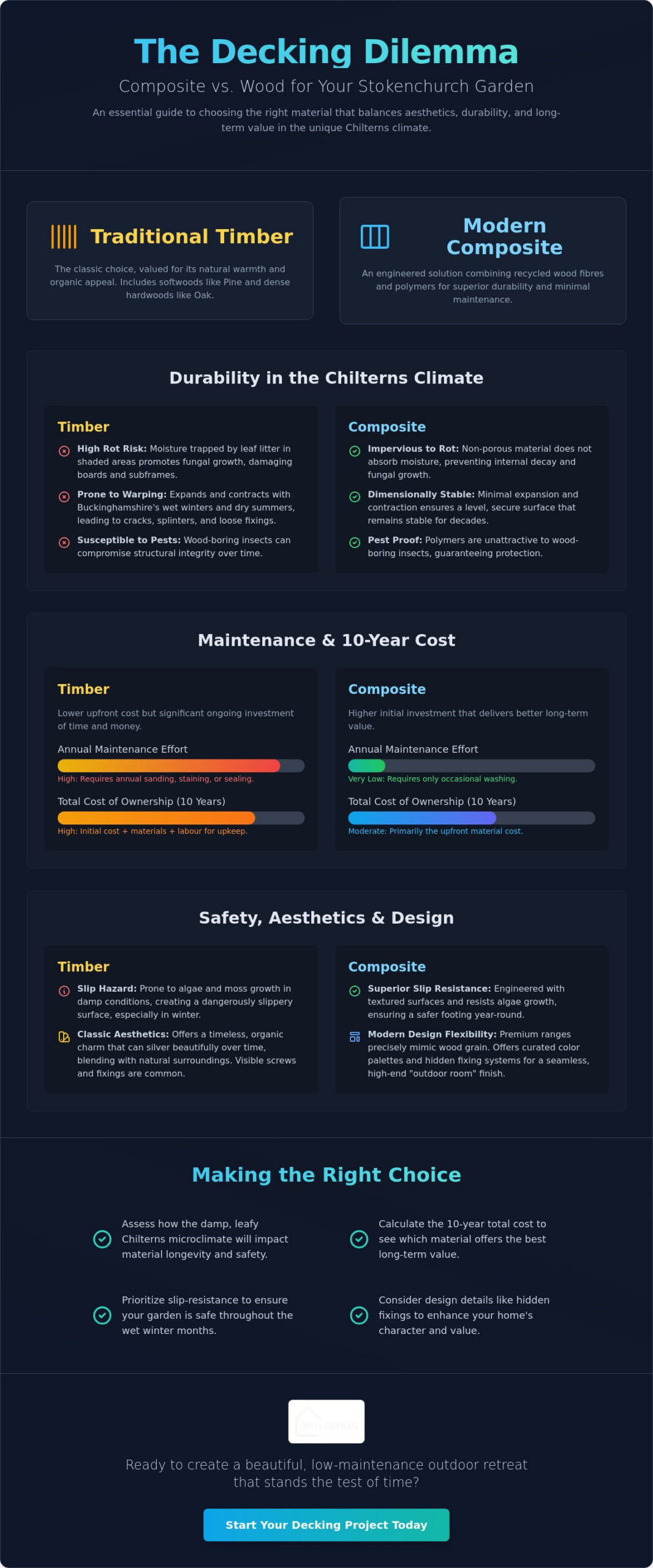
- Assess how the specific microclimate of the Chilterns impacts material longevity, particularly the risks of moisture retention in wooded areas.
- Calculate the 10-year total cost of ownership to determine if traditional timber or modern composite offers the best long-term value for your home.
- Compare the structural performance of composite decking vs wood Stokenchurch gardens require to remain safe and slip-resistant throughout the winter months.
- Identify design techniques, such as hidden fixings and curated colour palettes, that ensure your new deck enhances your home’s existing character.
- Understand the importance of comprehensive project management in delivering a high-end finish that prioritises both aesthetic beauty and structural safety.
The Decking Dilemma in Stokenchurch: Composite vs Wood
Stokenchurch is nestled within the Chilterns Area of Outstanding Natural Beauty. This setting inspires a desire for refined outdoor living. We’ve seen a significant shift toward high-end decking as residents look to create sophisticated spaces for entertaining. However, the decision often comes down to a fundamental choice between tradition and technology. When evaluating composite decking vs wood Stokenchurch property owners must consider how each material performs under the specific environmental pressures of our wooded, often damp region.
Traditional timber remains a staple of British garden design. It’s generally categorized into softwoods like Pine, which are pressure-treated for longevity, and premium hardwoods such as Ipe or Oak. These hardwoods provide exceptional density and natural resistance to decay. Conversely, modern composite is an engineered Wood-plastic composite (WPC). This material combines recycled wood fibres with high-density polymers to create a board that resists the common pitfalls of natural timber, such as rot and warping. Deciding between the composite decking vs wood Stokenchurch gardens require is a balance of upfront cost and long-term convenience.
The Rise of Composite Materials in Buckinghamshire
The concept of the “outdoor room” has redefined how we use our gardens. You want a space that looks as immaculate in November as it does in June. Modern “capped” composite technology has been a game-changer here. These boards feature an extra protective layer that provides superior resistance to stains and fading. Early versions of composite often looked synthetic, but today’s premium ranges mimic the intricate grain patterns of real wood with remarkable precision. This evolution allows you to enjoy a high-end aesthetic without the logistical burden of constant upkeep.
The Timeless Appeal of Traditional Timber
Despite the advancements in engineering, the organic warmth of real wood holds a unique charm. Many homeowners value the tactile nature of timber and the way it silver-ages over time to blend with the natural surroundings. For those managing budget-conscious projects, softwood decking offers a lower initial investment. It’s also a choice that can feel more aligned with heritage values, especially when using FSC-certified British timber. While it requires a disciplined maintenance schedule, the reward is a classic, natural finish that remains deeply rooted in traditional craftsmanship.
Comparing Durability and the Chilterns Climate Impact
Stokenchurch is defined by its lush, wooded surroundings and the rolling hills of the Chilterns. While this creates a stunning backdrop, it presents a unique set of challenges for outdoor structures. The dense canopy of beech and oak trees common in our area results in significant leaf litter and prolonged periods of shade. For traditional timber, this environment is particularly aggressive. When considering composite decking vs wood Stokenchurch homeowners must account for the “Rot Factor.” Moisture becomes trapped under fallen leaves, creating a microclimate where fungi thrive. This doesn’t just affect the surface; it can silently destroy timber subframes long before the boards themselves show signs of failure.
Composite materials offer a decisive advantage here. Because they’re engineered to be non-porous, they don’t absorb the moisture that leads to internal decay. While wood-boring insects can find a home in traditional timber, they’re a non-issue for composite polymers. Additionally, modern capped composite provides exceptional UV stability. Unlike wood, which can grey and crack under the summer sun, these boards maintain their rich colour and structural integrity for decades. This reliability is why many of our clients view composite as a high-performance investment rather than just a building material.
Structural Integrity Over Time
Timber is a natural material that reacts to its surroundings. Without rigorous annual treatment, it will inevitably warp, crack, and splinter as it cycles through Buckinghamshire’s wet winters and dry summers. This movement can pull fixings loose and create uneven surfaces. We find that composite offers superior dimensional stability. It doesn’t expand or contract to the same degree, ensuring your deck remains level and secure. It’s vital to remember that the subframe material is just as important as the surface. We often recommend a comprehensive approach to decking installation that pairs high-quality boards with a robust, weather-resistant foundation to ensure a truly frictionless long-term experience.
Safety and Slip Resistance in Wet Weather
In the shaded gardens typical of South Oxfordshire, algae growth is a persistent safety concern. On timber decks, this film becomes incredibly slippery when wet, turning a peaceful garden into a hazard. Composite’s non-porous surface makes it much harder for algae to take root, making it inherently more slip-resistant. For areas with high foot traffic or near water features, some ranges include specialised textures. For instance, boards with integrated “Lasta-Grip” style textures provide enhanced traction even in the depths of a wet Buckinghamshire winter. This focus on safety ensures your outdoor space remains a sanctuary for your family regardless of the weather.
Maintenance and Lifetime Cost Analysis for Homeowners
When comparing composite decking vs wood Stokenchurch homeowners often focus on the initial quote. It’s a common misconception that timber is the more economical choice. While the upfront material cost for pressure-treated wood is generally lower, the financial landscape shifts dramatically over a ten-year horizon. We view decking as a long-term asset, and understanding the total cost of ownership is vital for making an informed investment. Timber requires a relentless cycle of sanding, staining, and oiling to remain functional. These aren’t just chores. They represent a significant ongoing expense in both materials and professional labour.
Composite decking offers a much simpler alternative. Its maintenance routine typically involves nothing more than a soap-and-water wash twice a year to remove surface debris and seasonal pollen. There’s no need for expensive chemical strippers or annual sealants. To ensure this longevity, we recommend working with experienced landscaping contractors who understand the technical requirements of composite subframes. Professional installation removes the logistical burdens from your shoulders, providing a frictionless experience from the first board to the final finish.
The Real Labour Cost of “Cheap” Timber
Maintaining a 30sqm timber deck over a decade requires a disciplined commitment. You can expect to spend significant man-hours every spring preparing the surface for the year ahead. In the UK climate, high-quality oils and anti-fungal treatments are mandatory to prevent the rot issues common in wooded areas. When you factor in the price of premium wood stains and the rental of industrial sanders, the “savings” of timber quickly evaporate. We’ve found that many homeowners choose to replace their timber decks with composite after approximately seven years because the labour burden simply becomes too high to sustain.
Long-term Property Value and Curb Appeal
Your garden’s condition directly impacts the resale value of your Stokenchurch home. A pristine, high-performance deck suggests a property that has been maintained with precision and care. From a surveyor’s view, rotting or unstable timber is a frequent red flag in home reports that can complicate a sale. Market data from 2024 indicates that composite decks can recover 70-80% of their installed cost in resale value, whereas wood decks often only recover 50-60%. Choosing premium composite is a decisive signal of a high-spec, modern home renovation. It provides peace of mind for you now and a tangible advantage if you ever decide to move.
Design Aesthetics: Matching Your Deck to Your Home
Achieving a cohesive look requires more than just selecting a material; it involves understanding how your deck interacts with the existing architecture of your property. In South Oxfordshire, homes often feature traditional brick and flint details that demand a sympathetic design response. When weighing composite decking vs wood Stokenchurch homeowners should select palettes that mirror these natural tones. Earthy ambers and deep greys often provide the most sophisticated match for local flint-work, ensuring the structure feels like an intentional addition rather than an afterthought. We believe that a deck should never compete with your home’s heritage, but rather enhance its character through precise material selection.
We prioritise a clean, high-end finish by utilising hidden fixing systems. Unlike traditional timber, which often relies on visible surface screws that can catch the light or eventually “pop” as the wood moves, modern composite boards are secured through lateral clips. This creates a smooth, frictionless surface that enhances both safety and visual flow. This level of precision is a hallmark of our approach to home extensions Buckinghamshire residents trust, where we ensure every external element complements the primary structure. To complete the look, we often integrate discreet LED lighting and glass balustrades, which provide a contemporary edge without obstructing your views of the Chilterns.
Integrating Decking with Bespoke Garden Rooms
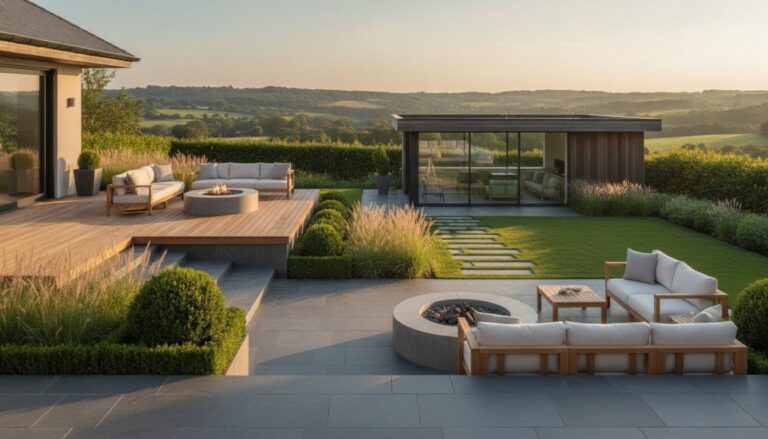
A well-designed deck serves as the essential anchor for bespoke garden rooms Aylesbury and Stokenchurch clients frequently request. By matching the interior floor levels with the exterior boards, we create a flush threshold that physically expands your living area. This transition is especially effective on the sloping plots common in our region. Multi-level decking can turn a challenging incline into a series of functional, elegant terraces, providing a structured progression from your back door to your garden retreat. Our team handles every phase of this integration, ensuring the groundworks and structural engineering support a perfectly level finish.
Choosing Textures for Local Architectural Styles
Stokenchurch sits within the Chiltern Hills AONB, where planning controls and aesthetic expectations favour materials that conserve the area’s natural beauty. We recommend “Weathered” textures for properties in more rural, exposed settings, as these mimic the character of aged timber while retaining modern durability. Conversely, smooth, contemporary finishes are ideal for modern renovations where clean lines are the priority. Balancing modern materials with rural aesthetics involves selecting matte finishes and muted tones that sit quietly within the landscape. To begin your project with a team that understands these local nuances, we invite you to explore our full range of decking solutions.
The WillsByrne Approach: Seamless Decking Installation
The debate regarding composite decking vs wood Stokenchurch homeowners face often concludes with a choice of material, but the success of the project rests entirely on the quality of the installation. We believe that a high-end outdoor space requires more than just premium boards; it demands a disciplined, professional approach to construction. While DIY projects might seem appealing, they often lead to structural compromises or drainage issues that manifest years later. When navigating the final decision between composite decking vs wood Stokenchurch residents can trust our team to deliver a result that prioritises both structural perfection and long-term value.
We take full responsibility for the logistical burdens that often overwhelm property owners. This includes the methodical clearance of the site and the responsible disposal of existing materials. Our team operates as a single point of contact, removing the need for you to coordinate multiple trades or manage waste removal yourself. This streamlined model is designed to provide peace of mind, allowing you to focus on your vision while we handle the complex operational requirements of the build. Our commitment to transparency ensures you’re informed at every stage, from the first delivery to the final inspection.
Our Methodical Design and Build Process
Our process begins with an initial consultation to align your new deck with your specific lifestyle goals and property architecture. We don’t just look at the surface; we prioritise expert groundworks. Proper drainage and subframe stability are non-negotiable for a structure intended to last decades, especially in the damp environment of the Chilterns. Once the foundation is secure, we apply precision cutting and installation techniques to achieve a flawless, premium aesthetic that a standard DIY effort cannot match. This attention to detail ensures your deck remains safe, level, and beautiful for years to come.
Transforming Your Outdoor Living Space
A deck is rarely a standalone feature. We often integrate these structures with wider garden elements, such as bespoke fencing, brickwork, or elegant patios. This holistic approach ensures your entire outdoor space feels unified and purposeful. We’re committed to delivering a frictionless experience during the construction phase, maintaining a tidy site and clear communication throughout the project. We treat your home with the respect it deserves, delivering a finished product that stands as a testament to quality craftsmanship. Contact WillsByrne today to plan your Stokenchurch garden transformation and discover how our comprehensive oversight can bring your vision to life.
Elevate Your Outdoor Living Experience
Deciding on the right foundation for your garden is a significant step in enhancing your home’s value and your daily lifestyle. We’ve explored how the specific climate of the Chilterns demands a material that can withstand moisture and shade without constant intervention. When comparing composite decking vs wood Stokenchurch residents often find that the long-term cost benefits and superior safety profiles of modern polymers offer a level of peace of mind that traditional timber simply cannot match. A successful project requires more than just high-quality materials; it necessitates a partner who brings methodical project management and technical precision to every board.
As bespoke design-and-build specialists, we provide the comprehensive oversight needed to transform your vision into a structural reality. Our team is ready to apply our expert landscaping knowledge across Buckinghamshire to create a space that is both beautiful and enduring. We’re committed to delivering a result that reflects your personal style while adhering to the highest standards of structural integrity. Request a Professional Decking Consultation with WillsByrne and take the first step toward a frictionless garden renovation. We look forward to helping you create a sanctuary that your family will enjoy for decades to come.
Frequently Asked Questions
Is composite decking more slippery than wood when wet?
Composite decking is generally safer and more slip-resistant than traditional timber because it does not absorb water or support the growth of slippery algae. In the shaded gardens of Stokenchurch, timber often develops a green film that becomes hazardous during wet winters. High-quality composite boards are engineered with textured surfaces to provide reliable traction even in the depths of a damp Buckinghamshire winter.
How much more expensive is composite decking than timber in the UK?
The initial investment for composite is higher than pressure-treated timber, often costing double the material price. However, when evaluating composite decking vs wood Stokenchurch homeowners should look at the total lifecycle cost. Timber requires annual staining and eventual replacement, while composite remains maintenance-free for decades. Most property owners find that the cost difference is recouped within five to seven years through savings on labour and materials.
Can I install a hot tub on a composite deck in my Stokenchurch garden?
You can certainly install a hot tub on a composite deck, provided the subframe is engineered to handle the substantial weight. A filled hot tub can weigh several tonnes, so we design bespoke structural supports and closer joist spacing to ensure the deck remains stable. It’s essential to plan this during the initial design phase to ensure the groundworks are sufficient for the load.
Does composite decking fade in direct sunlight?
Modern capped composite boards are highly resistant to UV rays and won’t fade significantly in direct sunlight. While early generations of composite might’ve lightened over time, today’s premium materials feature protective shells that maintain their rich colour for 25 years or more. This stability ensures your outdoor space looks as vibrant in its tenth year as it did on the day of installation.
How long does a professional decking installation take?
A professional installation typically takes between five and ten working days, depending on the complexity of the design and the scale of the groundworks. We manage every phase of the project, including site clearance and structural assembly, to ensure a frictionless experience. Larger projects involving multi-level terraces or integrated garden rooms may require additional time for precision finishing.
Do I need planning permission for a new deck in Buckinghamshire?
Most decking falls under permitted development if it’s no more than 30cm above the ground and covers less than 50% of your garden. However, because Stokenchurch is within the Chilterns AONB, stricter controls may apply to ensure the design conserves the area’s natural beauty. We recommend checking with Buckinghamshire Council for pre-application advice if your deck is raised or located in a prominent position.
What is the best way to clean composite decking after winter?
The most effective way to clean your composite deck is with warm, soapy water and a soft-bristled brush. You should avoid using high-pressure washers at close range, as this can damage the protective capping. A simple biannual wash is sufficient to remove the leaf litter and debris that naturally accumulates in the wooded environments of South Oxfordshire.
Can composite decking be recycled at the end of its life?
High-quality composite decking is a sustainable choice as it’s often manufactured from recycled wood fibres and reclaimed plastics. At the end of its long lifespan, the material can be recycled again into new industrial products. This circular approach reduces the environmental impact compared to timber, which is often treated with chemicals that prevent it from being easily repurposed.