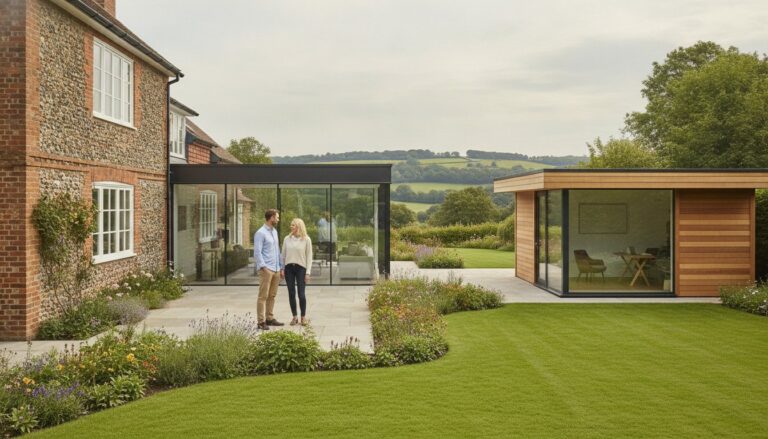
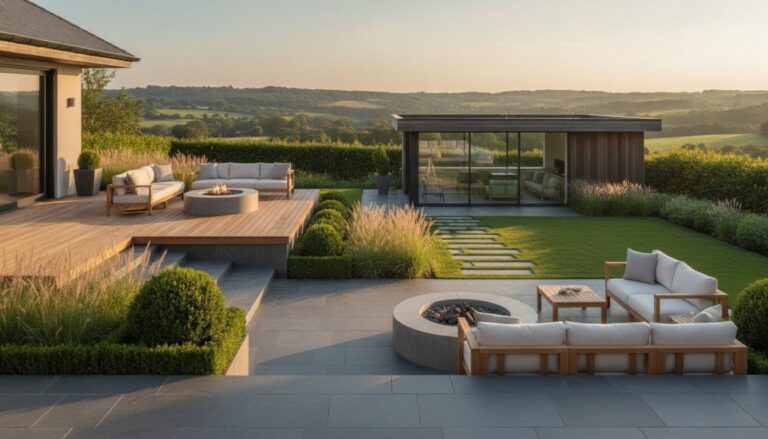
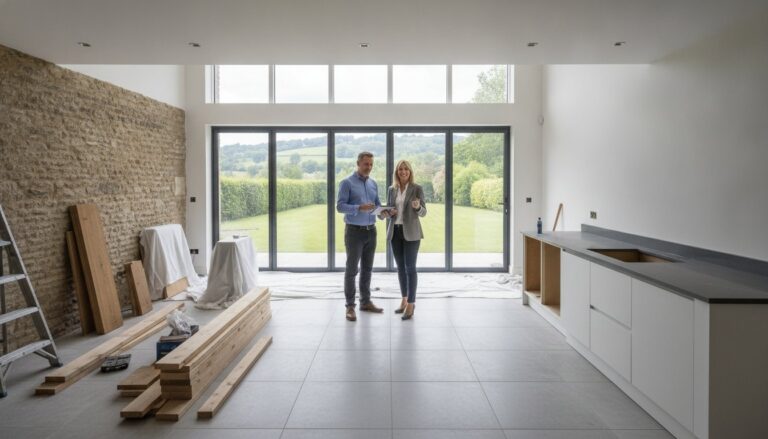
What if the most stunning architectural drawings for your home are actually the biggest obstacle to your project’s success? Many homeowners find themselves asking, “do I need an architect for an extension Thame,” only to realize that a set of plans is just one small piece of a much larger puzzle. You’ve likely spent hours imagining how a new space could transform your daily life, yet the fear of a South Oxfordshire District Council rejection or a budget-shattering design can feel paralyzing. It’s natural to feel overwhelmed by the prospect of managing separate architects, surveyors, and builders while trying to maintain a cohesive vision for your property.
We understand that you’re looking for more than just a drawing; you’re looking for a finished, functional home. This guide clarifies the legal requirements for your project and explains how a unified design-to-completion framework ensures your extension is both beautiful and structurally efficient. We’ll explore local planning nuances, compare traditional architects with integrated partners, and show you how to achieve a single point of accountability for your entire renovation or extension project.
Key Takeaways
- Learn why UK law doesn’t require a registered architect for residential projects and how to distinguish between planning drawings and technical construction documents.
- Discover how Thame’s Conservation Areas and South Oxfordshire District Council’s specific guidelines impact your decision when asking, “do I need an architect for an extension Thame.”
- Compare the traditional tendering process with a modern design-and-build model to see which approach offers the most reliable path to a finished home extension.
- Evaluate your project’s unique site constraints, including local heritage requirements and structural complexities, to determine the necessary level of professional oversight.
- Understand the benefits of a unified team that provides a single point of contact, ensuring your vision remains intact from the initial sketch to the final brick.
The Legal Reality: Is an Architect Mandatory for a Thame Extension?
When starting a home improvement project, the first hurdle is often understanding The Legal Reality: Is an Architect Mandatory? for your specific goals. In the UK, there’s no legal requirement to hire a registered architect for a residential extension. While many people ask “do I need an architect for an extension Thame,” the answer depends more on the complexity of your site and the level of risk you’re willing to manage. You can technically submit your own plans to South Oxfordshire District Council (SODC). However, simple sketches rarely survive the scrutiny of modern planning departments or the rigorous standards of Building Control. Professional oversight ensures your vision is translated into a language that local authorities and builders both understand.
Architect vs. Architectural Designer vs. Structural Engineer
The title “Architect” is protected by law, meaning only those registered with the Architects Registration Board can use it. These professionals often focus on high-concept aesthetics, which can be beautiful but occasionally push budgets beyond their limits. Architectural designers offer a practical alternative, focusing on functional layouts and local planning compliance without the premium associated with the protected title. Regardless of who draws the initial vision, a structural engineer remains a non-negotiable partner for any extension. They provide the precise calculations for steel beams and foundations that ensure your home is safe. We believe an integrated design-and-build approach is often the most efficient way to bring these disciplines together, providing a single point of accountability.
When “Simple” Drawings Aren’t Enough
Planning drawings and technical construction drawings serve two entirely different purposes. Planning drawings show SODC what the project looks like from the outside, ensuring it respects Thame’s local character and heritage. Technical drawings, however, act as the “instruction manual” for your builder. They detail insulation values, fire safety, and how to navigate complex issues like building over shared drains or near property boundaries. In Thame’s established neighborhoods, these hidden constraints are common. Vague plans often lead to “on-site surprises” that cause expensive delays and friction between different contractors. Detailed technical oversight becomes a legal and practical necessity whenever a project involves structural alterations that affect your building’s insurance and long-term structural integrity.
Choosing a design-and-build partner bridges the gap between these phases. It removes the stress of managing a separate architect, surveyor, and builder, ensuring that what’s drawn on paper can actually be built within your budget. This streamlined model, often employed by high-end specialists such as Daniels Contractors, provides the peace of mind that comes from knowing one team is responsible for the project from the first sketch to the final brick.
Navigating Planning Permission in Thame and South Oxfordshire
Planning success in Thame requires an intimate understanding of the South Oxfordshire District Council (SODC) guidelines. While the council is committed to supporting high-quality development, their reputation for precision reflects the town’s significant historical value. Homeowners often ask, “do I need an architect for an extension Thame,” but the real question is whether your design team understands the nuances of local heritage. A standard “off-the-shelf” plan rarely satisfies the aesthetic requirements of a market town with such a distinct character. Successful applications in this region lead with solutions that balance modern living with traditional preservation.
Thame’s Conservation Areas and Listed Buildings
Large portions of the town, particularly the areas surrounding the High Street and St Mary’s Church, fall within protected Conservation Areas. In these zones, the standard rules of development are considerably tighter. You will likely need a Heritage Statement to accompany your application. This document justifies how your new space respects the existing architecture and the wider streetscape. Utilizing traditional Thame stone or specific local brickwork patterns is often a requirement rather than a choice. We find that a local home extension specialist who understands these materials can often navigate this process more effectively than a remote designer who lacks local context.
Permitted Development vs. Full Planning in Thame
Not every project requires a full planning application. Many semi-detached and detached homes in Thame benefit from Permitted Development (PD) rights. The “Larger Home Extension” scheme allows for single-storey rear extensions up to 6 meters for semi-detached houses and 8 meters for detached houses. However, this still requires a “Prior Approval” process where neighbors are consulted. Even if your project fits within PD, you should secure a Lawful Development Certificate. This document provides vital evidence for future property sales, proving the work was legal at the time of construction.
Whether you choose a traditional Architect vs. Design & Build model, your drawings must be technically accurate. SODC planners look for clarity in how an extension impacts neighboring light and privacy. A professional partner handles these logistical burdens for you, ensuring that your vision is both ambitious and achievable within the local regulatory framework. This methodical approach removes the anxiety of potential rejection and sets a solid foundation for the build phase. By focusing on comprehensive oversight, we ensure your project moves through the planning system with minimal friction.
Architect vs. Design & Build: Comparing Your Delivery Models
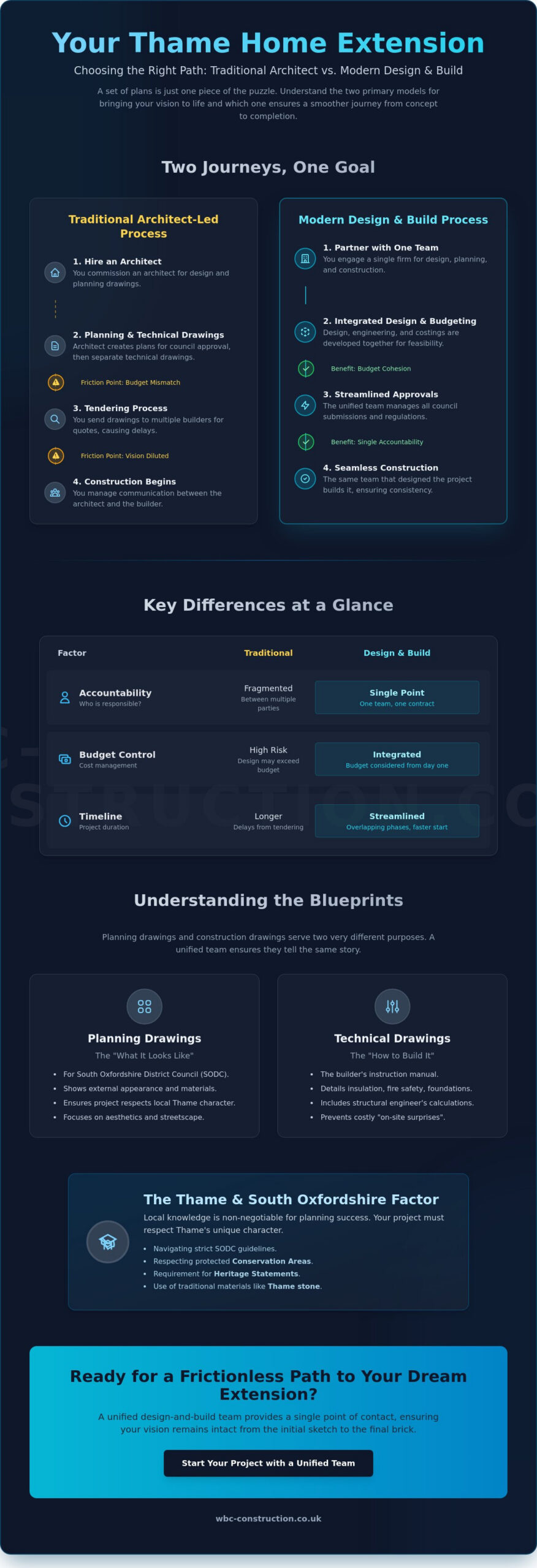
The traditional route to a home extension involves hiring an independent architect to produce a design, which you then put out to tender with various builders. While this offers a clear separation of roles, it often creates a “buildability gap.” This occurs when a visionary design is technically impressive but prohibitively expensive or structurally impractical to execute. When homeowners ask, “do I need an architect for an extension Thame,” they’re often seeking professional guidance but don’t realize that a fragmented team can lead to conflicting advice and budget creep. Managing multiple contractors requires significant time and emotional energy, often resulting in a disjointed experience for the client.
In contrast, the Design & Build model provides a single point of contact from the first conceptual sketch to the final brick. This integrated approach ensures that every design choice is grounded in construction reality. By aligning the creative and technical teams from day one, we eliminate the friction that typically arises between designers and contractors. For official guidance on whether your specific design requires formal approval, the UK Government’s Planning Portal remains the definitive resource for current regulations. This model is particularly effective for those seeking a premium, frictionless experience where excellence is the standard rather than an aspiration.
Cost Transparency and Budget Control
Fee structures differ significantly between these two models. Architects typically charge a percentage of the total build cost, which can sometimes incentivize more complex, expensive designs. A Design & Build partner generally offers fixed-price agreements, providing much-needed certainty before the groundworks begin. This model naturally leads to fewer “change orders” during construction because the team building the extension is the same one that designed it. For a deeper look at how this works in practice, our guide on Bespoke Home Extensions in Buckinghamshire details the advantages of full-service management. We prioritize honesty in our pricing, ensuring that your investment reflects the true value of the craftsmanship delivered.
Timeline and Project Management
Efficiency is a hallmark of the Design & Build process. We overlap the design and procurement phases, allowing materials to be ordered and site teams to be scheduled while final touches are being added to the plans. This “Single Point of Accountability” removes the logistical burden from the homeowner. You won’t find yourself caught in the middle of a dispute between an architect and a builder over technical specifications. Instead, a unified team manages everything, including Building Control inspections and coordination with structural engineers. This structured progression ensures the project remains on schedule and meets our exacting standards for structural perfection and aesthetic appeal.
The Thame Homeowner’s Checklist: Evaluating Your Project Scope
Assessing your project’s scope requires looking beyond aesthetic desires to the practical realities of your property. While a small porch might seem straightforward, a multi-storey addition introduces structural complexities that demand precise oversight. Determining “do I need an architect for an extension Thame” often starts with an honest assessment of your site’s physical limitations. You must consider factors like significant trees, sloping ground, or the restricted access typical of Thame’s more historic neighborhoods. These elements dictate whether a project remains a simple build or evolves into a complex engineering undertaking.
Consider these four pillars before finalizing your design route:
- Scale: Does the project involve a simple footprint expansion or complex vertical growth?
- Constraints: Are there shared drainage systems or underground utilities to navigate?
- Involvement: Can you dedicate significant time each week to managing contractors, or do you require a turnkey solution?
- Context: Does your design align with the existing character of your street, or are you attempting to set a bold new architectural precedent?
Small vs. Large Extensions: When to Level Up
For many homeowners, a single-storey rear extension is the ideal “builder-led” project. These often fall under Permitted Development and follow a predictable structural path. However, once you begin removing load-bearing walls or adding additional floors, professional design becomes essential for safety and insurance purposes. Complex structural alterations require detailed calculations to ensure the integrity of the original building isn’t compromised. When vetting potential partners, refer to our Choosing Home Improvement Companies guide to ensure they possess the technical expertise required for your specific project scope.
Party Wall Agreements and Neighborly Relations
In Thame’s terraced and semi-detached streets, the Party Wall Act 1996 is a critical legal consideration. If your extension involves excavating near a neighbor’s foundations or building on a shared boundary, you’re legally required to serve formal notice. Professional drawings are vital here. They provide the clarity needed to reassure neighbors and their surveyors. We recommend conducting a “Schedule of Condition” before any work begins. This document records the state of the neighboring property, protecting you from unfounded damage claims and maintaining positive relations in your community.
If you’re ready to move from evaluation to action, our team provides a comprehensive home extension service that manages every technical and legal detail. We prioritize transparency and precision, ensuring that your project proceeds without the stress of managing multiple conflicting contractors.
WillsByrne: A Frictionless Path from Concept to Completion
When you ask, “do I need an architect for an extension Thame,” you’re really asking how to ensure your vision becomes a reality without the typical stress of construction. WillsByrne Construction & Landscaping LTD bridges the gap between high-end architectural design and the practical realities of the build site. Our team provides a unified approach that removes the logistical burden from your shoulders. Instead of acting as a middleman between a separate designer and a builder, we serve as your single point of accountability. This partnership ensures that the aesthetic precision of the initial sketch is maintained through to the final structural detail.
We believe that trust is built through honesty and transparency. Our pricing models are comprehensive, designed to eliminate the hidden preliminaries or unexpected “PC sums” that often plague traditional construction contracts. Our deep familiarity with Thame and Monks Risborough allows us to source authentic local materials with efficiency. We understand which bricks and stones satisfy both your aesthetic standards and the requirements of local planning authorities. This local expertise ensures your project feels like a natural, high-quality evolution of your home’s heritage rather than a disjointed addition.
Our Integrated Design and Build Process
Our journey begins with a detailed initial consultation to understand your lifestyle goals and the unique character of your property. We then move into a collaborative design phase where we balance creative ambition with structural feasibility. Once the designs are perfected, we handle the entire planning submission process with South Oxfordshire District Council, utilizing our knowledge of local precedents to smooth the path to approval. During the construction phase, we operate with a philosophy of “quiet excellence.” As your Principal Contractor, WillsByrne Construction & Landscaping LTD manages all health and safety requirements under CDM 2015 regulations, ensuring every stage is executed with disciplined precision.
Next Steps for Your Thame Extension
If you’re ready to transform your living space, the next step is a professional feasibility assessment. We invite you to discuss your ideas with us during a site visit, where we can evaluate the local planning potential of your specific plot. Our portfolio of Property Renovations in Buckinghamshire demonstrates our commitment to delivering bespoke, high-value results for discerning homeowners. Whether you’re planning a grand kitchen extension or a comprehensive property overhaul, we provide the steady hand and expert oversight required for success. Contact WillsByrne Construction & Landscaping LTD directly to schedule your initial consultation and begin the journey toward a beautifully realized home.
Securing the Future of Your Thame Home
While the legal answer to the question do I need an architect for an extension Thame is technically no, the practical reality is that professional precision is vital for success. Navigating the specific requirements of South Oxfordshire District Council demands more than just a creative eye; it requires a deep understanding of local heritage and technical buildability. You’ve seen how a unified design-and-build framework provides a single point of accountability, ensuring your vision isn’t lost between separate contractors. This approach prioritizes peace of mind, allowing you to focus on the lifestyle benefits of your new space while we handle the complex logistics.
We’re dedicated to delivering structural perfection through a transparent, frictionless process. Our team offers fixed-price contract options and comprehensive project management from the initial planning stages through to final completion. Our expertise in local planning regulations means your project is in reliable hands from day one. Book a consultation with WillsByrne for your Thame extension to discuss how we can bring your vision to life with quiet excellence. Your home’s next chapter deserves the care and integrity of a partner who values quality as much as you do.
Frequently Asked Questions
Can I use a building designer instead of an architect in Thame?
Yes, you can certainly use a building designer. While they don’t hold the protected title of “Architect,” they possess the technical skills to produce planning and construction drawings. This is a practical choice for many homeowners wondering “do I need an architect for an extension Thame” because designers often focus on functional, buildable solutions that align with your specific budget.
How much does it cost to have extension plans drawn up in Oxfordshire?
Professional fees in Oxfordshire vary depending on the complexity of your project and the specific services you require. Some professionals charge a percentage of the total construction cost, while others provide fixed-price quotes for the design phase. We recommend requesting a detailed breakdown of what’s included to ensure there are no hidden costs for revisions or technical calculations during the process.
Will I need an architect for a garden room in Thame?
An architect is rarely necessary for a garden room. These projects often fall under Permitted Development rights, provided they meet specific height and size criteria. A dedicated design-and-build partner specializing in bespoke garden rooms can manage the entire process, from the initial concept to the final groundworks, without the need for independent architectural services or separate contractors.
What happens if I build an extension without planning permission in SODC?
Building without the necessary approvals from South Oxfordshire District Council (SODC) can lead to enforcement action. The council has the power to issue a notice requiring you to demolish the extension or return the property to its original state at your own expense. It also makes it nearly impossible to sell your home, as buyers and mortgage lenders require proof of planning compliance.
How long does the planning application process take in Thame?
The statutory period for a planning decision is usually eight weeks from the date the application is validated by SODC. This timeline can be extended for more complex projects or if the council requests additional information. We manage this process diligently to ensure all documentation is correct from the start, which helps in minimizing the risk of avoidable delays in the system.
Do I need a structural engineer if I already have an architect?
Yes, a structural engineer is essential even if you have an architect. While an architect designs the aesthetic and functional layout, the engineer provides the technical calculations for foundations, steel beams, and load-bearing elements. These calculations are a mandatory requirement for Building Control approval and ensure the long-term safety and structural integrity of your home extension.
Can a builder act as the principal contractor for my extension?
Yes, a builder can and often should act as the Principal Contractor. Under the Construction (Design and Management) Regulations 2015, the Principal Contractor is responsible for planning, managing, and monitoring health and safety during the construction phase. Our integrated model ensures that we fulfill this role with absolute precision, providing you with a single point of accountability throughout the build.
Is an architect required for building regulations approval?
An architect isn’t a legal requirement for building regulations approval. You do, however, need detailed technical drawings that demonstrate compliance with national standards for insulation, ventilation, and structural safety. These plans can be produced by any competent professional, including an architectural designer or an integrated design-and-build team that understands the technical requirements of the build.