What if the rigorous standards of Buckinghamshire Council are not a hurdle to clear, but the very blueprint that ensures your investment remains sound for decades? In the unique landscape of the Chilterns, viewing compliance as a quality-control framework is the first step toward a successful build. You likely feel that the distinction between planning permission and the building regulations for extensions Stokenchurch homeowners must follow is unnecessarily complex. It’s a common source of anxiety, particularly when an oversight in 2026 could lead to structural issues or a loss in property value.
Our expert guide simplifies this journey, offering you a clear path to a legal and structurally perfect home. We’ll outline the specific technical requirements for 2026, from thermal efficiency to structural stability, ensuring you move from design to final sign-off with absolute confidence. You’ll gain a transparent understanding of the local inspection timeline, allowing you to focus on the aesthetic transformation of your property while we manage the meticulous details of compliance. This structured approach replaces confusion with clarity, turning a technical necessity into a hallmark of quality craftsmanship.
Key Takeaways
- Learn the vital distinction between planning permission and technical compliance to ensure your Chilterns home remains both beautiful and legally sound.
- Identify how local soil compositions influence the specific building regulations for extensions Stokenchurch inspectors require for foundation stability and structural longevity.
- Compare the benefits of local authority versus private building control to choose the most efficient path for your project’s timeline and complexity.
- Master the logistics of Party Wall Agreements and water authority approvals to remove the friction of hidden legal obstacles before work begins.
- Discover how a single point of contact manages the entire compliance process, delivering a seamless transition from initial design to the final certificate of completion.
Building Regulations vs. Planning Permission in Stokenchurch
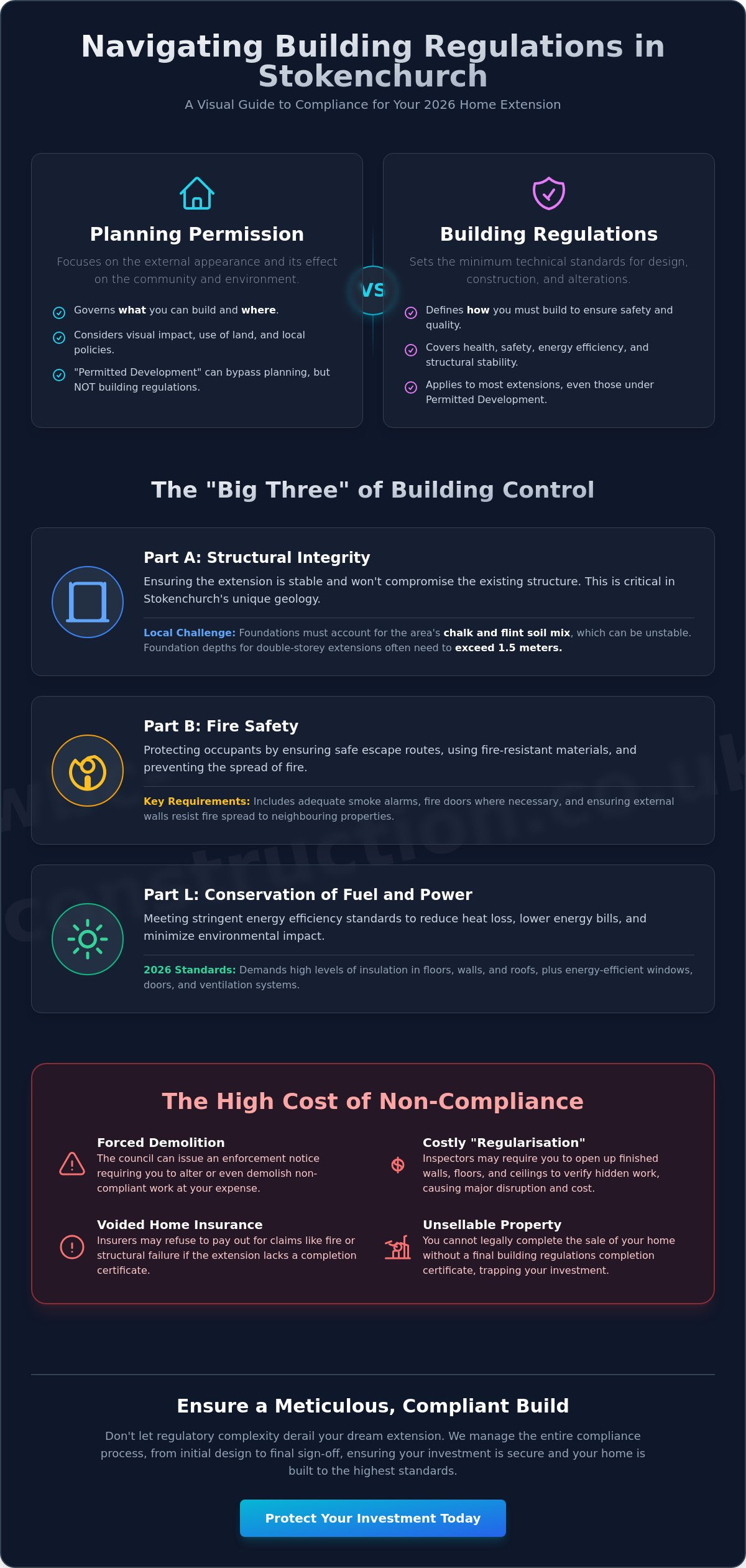
Homeowners often view building control and planning as the same hurdle, but they serve entirely different purposes. Planning permission focuses on the external appearance and the impact on the Stokenchurch community. In contrast, building regulations for extensions Stokenchurch residents must follow are the minimum standards for design and construction to ensure health and safety. While planning dictates whether you can build, building regulations define how you must build. This technical oversight is governed by the UK Building Regulations framework, which ensures every new structure is habitable, energy-efficient, and structurally sound. In the Chilterns, where the landscape is protected, these rules ensure that modern living standards don’t compromise the integrity of our local architecture.
Does Every Extension in Stokenchurch Need Approval?
Most structural additions require formal oversight, but a few specific exceptions exist. Small porches under 30 square meters or certain conservatories separated from the main house by external-grade doors might be exempt. However, many residents fall into the “Permitted Development” trap. They assume that because their project doesn’t require a full planning application, it also bypasses building control. This is a costly mistake. Even a modest single-story addition must comply with the building regulations for extensions Stokenchurch authorities enforce to protect the local housing stock. Properties near the M40 may also face specific requirements regarding acoustic glazing and ventilation to maintain internal air quality against motorway noise, while homes in the Stokenchurch Conservation Area must balance technical performance with traditional materials.
The Risks of Non-Compliance in Buckinghamshire
Ignoring these standards creates significant legal and financial liabilities. Buckinghamshire Council has the power to issue enforcement notices under Section 36 of the Building Act 1984, requiring you to alter or even demolish non-compliant work. If you’ve already finished the build, you might face “regularisation,” a process where floors and walls are opened up at your expense so an inspector can verify the hidden craftsmanship. Beyond the physical disruption, your home insurance may be voided if a fire or structural failure occurs in an uncertified extension. Most critically, you cannot legally sell your property without a final completion certificate. We mitigate these risks by integrating compliance into our bespoke home extensions in Buckinghamshire, handling every inspection to ensure your investment is protected. Our team manages the dialogue with inspectors from day one, providing the transparency and honesty needed to secure your home’s future value.
Core Compliance Areas for Your Stokenchurch Extension
Achieving a successful build requires more than just aesthetic vision; it demands a rigorous adherence to the “Big Three” of building control: structural integrity, fire safety, and thermal performance. These pillars ensure your home remains a safe sanctuary for your family. According to official government guidance on building regulations, these standards are non-negotiable for most structural alterations. When we manage the building regulations for extensions Stokenchurch homeowners envision, we treat these rules as a baseline for quality rather than a bureaucratic hurdle. By 2026, these standards have become even more stringent, particularly regarding how homes consume energy and protect occupants from fire risks.
Structural Integrity (Part A) and Local Ground Conditions
The ground beneath Stokenchurch is characterized by a challenging mix of chalk and flint. This geology is significant because it directly dictates the design of your foundations under Part A of the regulations. Chalk can be prone to instability if water ingress occurs, while flint can make excavation difficult and unpredictable. A structural engineer’s role is vital here. They provide the precise calculations needed to ensure your new walls don’t subside or put undue stress on the existing house. For a double-storey extension, foundation depths often need to exceed 1.5 meters depending on the proximity of trees and the specific soil density found on your plot. Meticulous attention to these hidden elements prevents the structural cracks that can devalue a property years after completion.
Energy Efficiency and Insulation (Part L)
The 2026 standards for energy efficiency represent a significant leap forward in Buckinghamshire’s commitment to sustainability. Part L now requires lower U-values for every component of your build. This means your new walls, windows, and roofs must retain heat far more effectively than those built just five years ago. For instance, high-performance glazing and bespoke insulation layers are now the industry standard for any compliant addition. However, creating a highly sealed environment introduces the risk of condensation. This is where Part F (Ventilation) becomes essential. We ensure your extension includes calculated airflow solutions, such as trickle vents or mechanical extract ventilation, to maintain a healthy indoor climate. If you’re looking for a partner to handle these technical complexities, you can view our project management services to see how we deliver end-to-end compliance.
Fire safety, or Part B, is the final critical area, especially for multi-storey projects. The 2026 regulations emphasize protected escape routes and the use of fire-rated materials in shared walls. Every extension we build incorporates interconnected smoke alarms and fire doors where required by law. This disciplined approach to safety ensures that your extension isn’t just a beautiful space, but a fortress of structural and operational excellence.
The Building Control Process: Local Authority vs. Private Inspectors
The path to a legally certified extension begins with a strategic choice between local authority oversight and a private approved inspector. Both routes ensure that the building regulations for extensions Stokenchurch projects require are met, but the experience differs in speed and flexibility. Buckinghamshire Council provides a dependable, traditional service, while private inspectors often offer a more bespoke, consultant-led approach. We manage this selection process for our clients, ensuring the inspector’s expertise aligns with the specific architectural demands of your build. Regardless of the route, the goal remains a seamless transition from technical drawings to a physical structure that exceeds safety standards.
Full Plans vs. Building Notice: Which is Best?
For substantial structural changes, we always recommend a ‘Full Plans’ application. This involves submitting comprehensive drawings and structural calculations to the building control body before a single brick is laid. This proactive approach allows the inspector to pre-approve the technical design, significantly reducing the risk of expensive mid-build corrections. In contrast, a ‘Building Notice’ is a faster route often used for minor internal alterations, but it lacks the security of a pre-approved plan. The Planning Portal guidance on extensions highlights that while a notice is simpler, it places the full risk of compliance on the builder and homeowner during the construction phase. Within the Stokenchurch jurisdiction, the cost difference between these routes is often negligible compared to the peace of mind a pre-approved plan provides.
Working with Buckinghamshire Council Inspectors
If you choose the local authority route, inspections are typically booked through the Buckinghamshire Council portal for the Stokenchurch and High Wycombe area. The schedule is rigorous. Inspectors visit at critical junctures to verify the craftsmanship that will eventually be hidden behind plaster and brickwork. These stages include:
- Foundation excavations: To check the chalk and flint stability discussed in previous sections.
- Damp proof course (DPC) installation: Ensuring a moisture-proof barrier between the ground and your walls.
- Roof structure: Verifying the lateral restraints and structural timber grades.
- Insulation and thermal layers: Confirming the Part L energy standards are met before closing the walls.
Our role as your Principal Contractor is to coordinate these visits seamlessly. We ensure the site is ready for scrutiny, providing the inspector with the necessary evidence of meticulous work. This disciplined management culminates in the issuance of your Final Completion Certificate. This document is your ultimate peace of mind; it proves that your extension is safe, legal, and built to the highest standards, ensuring a smooth process if you ever decide to sell your Buckinghamshire home.
Overcoming Common Stokenchurch Extension Obstacles
Building a successful extension in Stokenchurch involves managing variables that extend far beyond your own boundary lines. While the structural and thermal requirements are vital, the building regulations for extensions Stokenchurch homeowners must navigate also intersect with legal and utility-based hurdles. These obstacles, if unmanaged, can stall a project for months. By identifying these risks during the design phase, we maintain the momentum of your build and protect the professional relationships you share with your neighbours. This proactive strategy ensures that technical compliance doesn’t come at the cost of local goodwill or unexpected legal fees.
Party Wall Acts and Neighbour Relations
If your extension involves digging foundations within 3 or 6 meters of a neighbour’s structure, or work on a shared wall, the Party Wall etc. Act 1996 applies. You must serve a formal notice at least 2 months before work begins. In Stokenchurch, where many properties share boundaries, a neighbour’s dissent can lead to the appointment of surveyors, adding time and cost to your project. We advocate for early, transparent communication to secure written consent, which is the most efficient way to proceed. Managing these delicate negotiations is a core part of our service, and you can learn more by reading our guide on finding the best renovation companies near me in Buckinghamshire for expert management.
Drainage and Utilities: The Thames Water Factor
The South Buckinghamshire landscape is crisscrossed by shared sewers that often run through private gardens. If your extension is planned within 3 meters of a public sewer, you’ll likely need a Build Over Agreement from Thames Water. This is a critical step in the building regulations for extensions Stokenchurch authorities oversee; failure to secure this can result in the water authority demanding the removal of your structure to access their pipes. We conduct thorough site surveys early on to identify these assets. If a shared pipe is discovered, we manage the application process and ensure the foundation design protects the utility infrastructure, meeting Part H requirements for drainage and waste disposal.
The Chilterns Area of Outstanding Natural Beauty (AONB) also places unique demands on material selection. You must balance the high-performance insulation required by Part L with the traditional flint or brickwork aesthetics preferred in this protected region. While professional fees for surveyors and engineers might seem like an added burden, they are a small price to pay for avoiding the catastrophic costs of non-compliance. Our team provides the end-to-end delivery that handles these complexities, allowing you to enjoy a stress-free transformation. If you’re ready to discuss your project’s specific requirements, contact us for a bespoke consultation to begin your journey with a partner you can trust.
How WillsByrne Ensures a Meticulous, Compliant Build
At WillsByrne Construction, we believe that a building certificate is just the beginning of a quality home. We provide a single point of contact for the entire building regulations for extensions Stokenchurch homeowners require, moving beyond mere compliance to deliver structural perfection. Our “Concept to Completion” model means we manage the architects, structural engineers, and building control inspectors on your behalf. This approach removes the logistical burden from your shoulders, allowing you to focus on the creative vision for your property. Our quoting process is defined by absolute transparency; we ensure every building control fee and technical cost is detailed upfront to prevent hidden surprises. This honesty builds a foundation of trust before we ever break ground on your site.
The Master Craftsman’s Approach to Regulation
Our philosophy is rooted in the tradition of the Master Craftsman. While we strictly adhere to the building regulations for extensions Stokenchurch requires, we often aim for superior structural standards that exceed the minimum legal threshold. This disciplined approach ensures your extension isn’t just compliant, but exceptionally durable for decades to come. We’ve spent years cultivating a network of trusted local structural engineers and private inspectors who share our commitment to excellence. This alignment is central to our process of choosing home improvement companies in Buckinghamshire that prioritize integrity and meticulous craftsmanship over shortcuts.
Your Next Steps for a Stokenchurch Extension
Starting your journey with us is a straightforward, structured process designed to instill confidence. It begins with an initial consultation where we assess your site’s feasibility and specific regulatory needs, such as the chalk subsoils or Thames Water constraints discussed in previous sections. Once the design is finalized, our team handles all the technical paperwork and inspection bookings. We manage every stage of the build with a focus on seamless delivery, leading to a final handover where you receive a beautiful, compliant space and all necessary legal certificates. This logical progression ensures a stress-free experience, delivering the quiet excellence and peace of mind your Stokenchurch home deserves.
We invite you to experience a partnership where your vision is matched by our integrity. By choosing a team that values tradition and modern efficiency, you ensure your project is built to last. Let us handle the complexities of Buckinghamshire compliance while you prepare to enjoy your transformed living space. Our team is ready to provide the professional authority and reassuring partnership needed to bring your bespoke extension to life.
Securing Your Home’s Future with Expert Compliance
Your extension represents a significant investment in both your lifestyle and your property’s long-term value. Successfully managing the building regulations for extensions Stokenchurch requires in 2026 is the most effective way to protect that investment. We’ve discussed the importance of addressing specific Chilterns soil conditions and the rigorous thermal standards that now define modern Buckinghamshire homes. By prioritizing these technical details during the design phase, you avoid the hidden costs of non-compliance and ensure a seamless path to final approval.
We provide the professional authority and reassuring partnership needed to bring your vision to life without the logistical burden. Our team specializes in end-to-end project management, combining meticulous craftsmanship with a transparent communication style that keeps you informed at every stage. We handle the inspectors and the paperwork so you can enjoy the transformation of your living space. Book your Stokenchurch extension consultation with WillsByrne today to take the first step toward a bespoke, compliant, and beautifully finished home. Your project deserves the quiet excellence of a master builder dedicated to your success.
Frequently Asked Questions
Do I need building regulations for a small porch in Stokenchurch?
You don’t usually need formal approval for a porch if the floor area is under 30 square meters and the existing front entrance door is kept in place. The structure must be at ground level and not used for any other purpose. However, any electrical installations or glazing within the porch must still comply with relevant safety standards to ensure the build is legal.
How much do building regulation fees cost in Buckinghamshire for 2026?
Fees in Buckinghamshire are determined by the type of project and the total estimated cost of the works. The council provides a specific fee schedule for 2026 that separates costs into a plan charge and an inspection charge. We include a full breakdown of these anticipated costs in our transparent quoting process so you can budget with absolute confidence from the start.
Can I start my extension before building regulations are approved?
You can legally start work 48 hours after submitting a Building Notice, but this carries significant financial risk. If an inspector discovers non-compliant work during a later visit, you’ll be required to undo and rebuild it at your own expense. For the complex building regulations for extensions Stokenchurch projects often involve, we recommend waiting for Full Plans approval to ensure every structural detail is pre-verified.
What is the difference between a Building Notice and Full Plans?
A Building Notice is a simplified notification used for minor works, whereas Full Plans involve submitting detailed technical drawings and structural calculations for prior approval. Full Plans offer the security of a pre-vetted design, which is essential for larger or more complex additions. This route minimizes the chance of mid-build surprises and provides a clear blueprint for our craftsmen to follow during construction.
How long does it take for Buckinghamshire Council to approve building plans?
Buckinghamshire Council typically aims to provide a decision on a Full Plans application within 5 to 8 weeks. This timeline depends on the complexity of your structural requirements and the current volume of applications being processed by the local authority. Our team manages this entire submission period, coordinating directly with officials to ensure all technical queries are resolved promptly to maintain your project’s momentum.
Will building regulations affect the design of my bespoke garden room?
If your garden room exceeds 30 square meters or contains sleeping accommodation, it must meet the same building regulations for extensions Stokenchurch residents follow for traditional home additions. These rules dictate the standards for fire safety, thermal insulation, and structural stability. We integrate these technical requirements into the initial design phase, ensuring your bespoke space is both beautiful and fully compliant with local laws.
What happens if I built an extension without building regulations 10 years ago?
You’ll need to apply for a Regularisation certificate to prove the work met the standards in place when it was built. This process often involves exposing foundations or structural beams so an inspector can verify the hidden craftsmanship. Securing this certificate is vital if you intend to sell your property, as solicitors will require proof of compliance before any transaction can proceed.
Do I need a structural engineer for a single-storey extension in Stokenchurch?
You’ll need a structural engineer to provide the essential calculations for lintels, floor joists, and roof timbers. These technical documents are a mandatory part of your building control submission and ensure the extension is safe. In Stokenchurch, an engineer’s expertise is particularly important for designing foundations that can withstand the local chalk and flint subsoils, providing the long-term stability your home deserves.